
What Is Liquid Cooling Hose? Complete Guide for All Cooling Scenarios
Liquid cooling hose is the core pipeline component of all liquid circulation cooling systems, responsible for transporting coolant between cold plates, radiators, servers, pumps and heat exchangers. Without high-performance liquid cooling hose, the whole liquid cooling loop will face risks like coolant leakage, pipe kinking and heat dissipation failure. Whether you build a custom gaming PC loop, deploy data center direct liquid cooling or assemble EV thermal management systems, selecting matched liquid cooling hose directly determines system stability and service life.
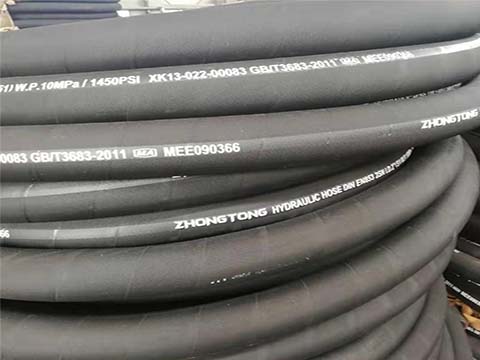
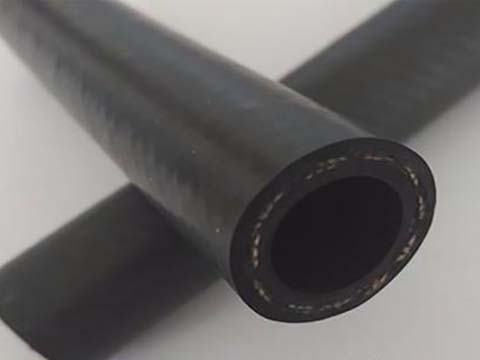
Diverse material options cover all working demands of liquid cooling hose on the market. EPDM liquid cooling hose takes the dominant position for industrial and server cooling, featuring low coolant permeability, thermal aging resistance and wide temperature adaptability from -40℃ to 120℃. Silicone liquid cooling hose owns ultra-high flexibility for narrow space wiring, favored by DIY PC modders. Transparent PVC and PTFE liquid cooling hose support visual inspection of coolant flow, ideal for laboratory and precision semiconductor cooling equipment. Stainless steel reinforced liquid cooling hose handles high-pressure large-scale data center cooling loops with anti-corrosion and flame-retardant properties.
The outstanding advantages of premium liquid cooling hose solve many pain points of traditional air cooling pipelines. First, multi-layer reinforced structure prevents kinks during bending, so liquid cooling hose can be routed freely inside compact chassis or server racks without blocking coolant flow. Second, inner smooth lining reduces fluid resistance, lowering pump load and cutting overall energy consumption of cooling systems. Third, certified liquid cooling hose achieves perfect compatibility with water, glycol and dielectric coolant, avoiding chemical reaction contamination that blocks cold plates. Fourth, most industrial-grade liquid cooling hose meets UL94 V0 flame retardant standard, greatly improving safety for high-power heat dissipation equipment.
Liquid cooling hose has wide application ranges across multiple high-heat industries. For consumer electronics, gamers use transparent colored liquid cooling hose to build RGB custom water cooling rigs for CPU and GPU overclocking. In hyperscale data centers, large-caliber EPDM liquid cooling hose connects CDU units and server cold plates to realize direct-to-chip liquid cooling and reduce PUE value. New energy electric vehicles adopt lightweight reinforced liquid cooling hose for battery pack and motor thermal control. Besides, liquid cooling hose is also widely used in laser equipment, industrial power inverters, medical imaging devices and semiconductor production cooling lines.
Key factors you must check before purchasing liquid cooling hose include inner and outer diameter size, working pressure rating, temperature range, material compatibility and matching fitting type. Small ID liquid cooling hose suits mini ITX PC loops, while large OD reinforced liquid cooling hose fits data center large circulation systems. Quick-connect compatible liquid cooling hose simplifies installation and later maintenance without draining the whole loop. Avoid cheap thin-walled liquid cooling hose with poor reinforcement, as it will crack and leak under long-term temperature cycles, causing irreversible damage to expensive chips and hardware.
In conclusion, liquid cooling hose acts as the blood vessel of every liquid cooling system. Investing in qualified, application-matched liquid cooling hose minimizes maintenance costs, extends equipment lifespan and guarantees stable heat dissipation performance under long-hour high-load operation. As liquid cooling technology replaces air cooling in more high-power scenarios, high-quality liquid cooling hose will become an indispensable standard accessory for thermal management projects of all sizes.
Leave Your Product Requirements
Your email address will not be published. Required fields are marked *